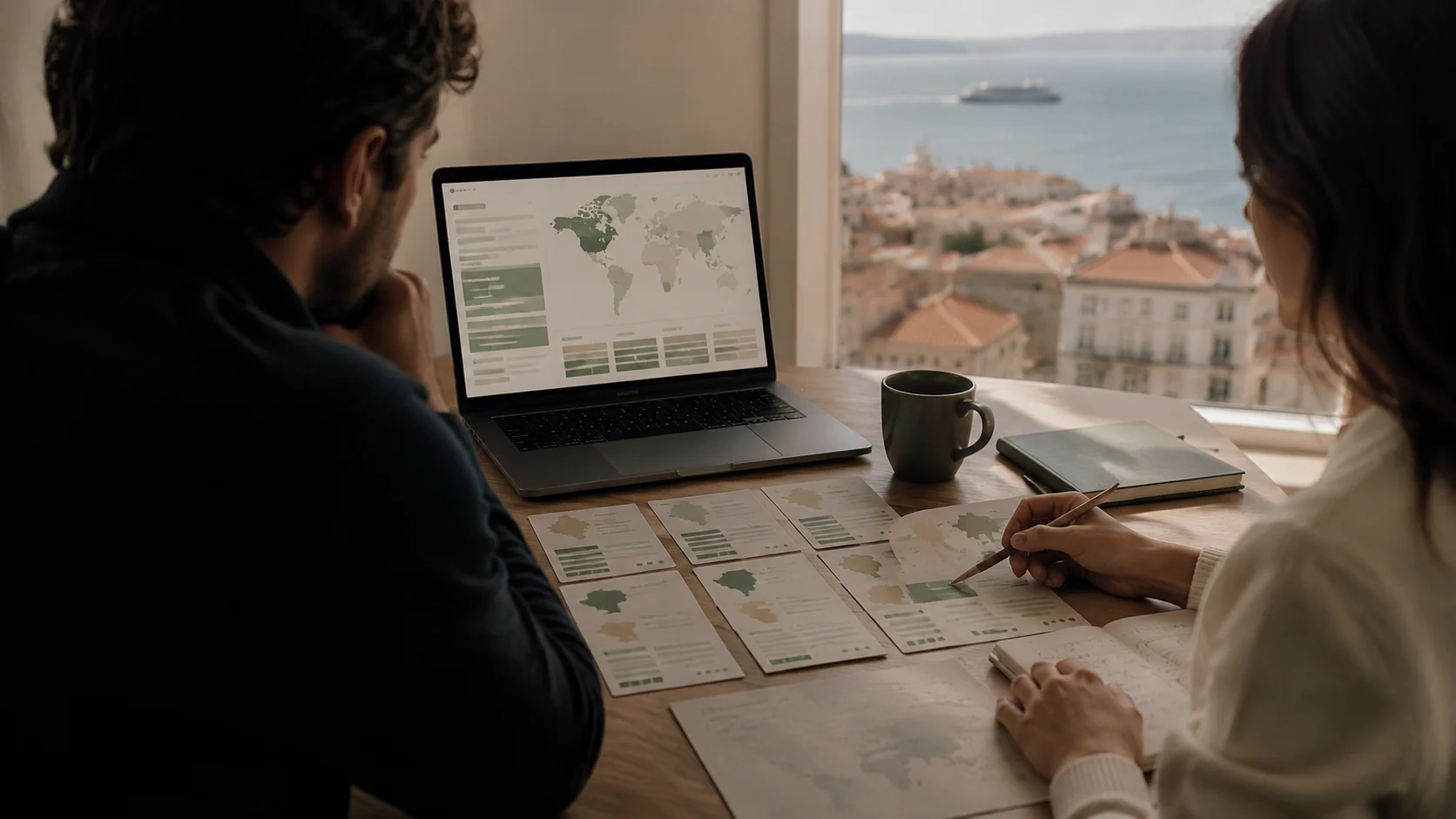
Field notes

Track priority-date questions before comparing immigrant routes.

A research guide for keeping Visa Bulletin, country-of-chargeability, filing-chart, and timing questions visible in EB-1A and EB-2 NIW conversations.

Official-source trail visibleNo route scoringCounsel-ready questions
Review attorney readinessCompare EB-1A and NIWTiming questions, not predictions
Research preparation boundary

Use this page to organize public criteria, evidence categories, timing questions, and official sources before a professional consultation.

Route dossier

Keep profile, evidence, sources, and questions in view.

Each page keeps context, evidence categories, source status, and professional questions as separate working surfaces before the detailed notes take over.

01

Profile context

Use the reader's facts as the first lens before comparing route mechanics.

02

Document questions

Keep evidence questions separate from timing, source checks, and any professional interpretation.

03

Source trail

Use official-source status and update timing as part of the page, not as a hidden footnote.

04

Counsel brief

Move the page into prepared questions, packet structure, and next-source checks.

Preparation loop

Move from research notes to a cleaner first conversation.

PathwayMatch keeps the public flow practical: organize evidence, prepare professional questions, and only share details when the user explicitly chooses a handoff.

01

Inventory evidence

Group broad evidence categories before interpreting strength or route implications.

Open inventory
02

Prepare questions

Turn route names, timing pressure, and source gaps into a short consultation agenda.

Open checklist
03

Consent-based handoff

Keep private details and legal advice inside the professional relationship the user chooses.

Review boundary

Timing layer

Priority-date context can change how a comparison feels.

Evidence questions and timing questions should stay separate, especially when comparing EB-1A and EB-2 NIW.

  • Record the immigrant category being researched and the country-of-chargeability question to review.
  • Separate evidence strength questions from filing-chart and final-action-date questions.
  • Treat old forum summaries and old attorney articles as prompts to recheck official sources.
  • Bring status, travel, dependent, and timing concerns into professional review.

Source habit

Use official-source checks as part of the research workflow.

The point is not to interpret the bulletin automatically, but to make sure the right source questions are visible.

  • Check the current Visa Bulletin and USCIS filing-chart guidance before relying on old timing assumptions.
  • Note whether the question is about filing-date question, final action, adjustment timing, or consular processing.
  • Capture which month and chart were reviewed so the conversation does not drift.
  • Avoid treating movement in one month as a prediction for a future month.

Before counsel

Turn timing anxiety into a precise question list.

A good first call separates evidence planning from priority-date and status planning.

  • Ask how priority-date facts interact with the route being researched.
  • Ask what should be rechecked before changing filing or timing plans.
  • Ask which dependent, travel, or status facts matter for the timing discussion.
  • Keep private immigration history out of lightweight public-facing tools.

Deeper research notes

Turn the page into a stronger preparation packet.

These notes add context, source checks, and counsel-prep prompts without turning the page into a route decision.

Source tracking

Treat changing facts as source-check tasks.

Field-note pages should make dynamic information visible without becoming a news feed or stale advice archive.

  • Track which facts change often, such as fees, forms, processing ranges, visa bulletin movement, or policy-source updates.
  • Explain why an official source should be rechecked before a user relies on old notes.
  • Separate source freshness from personal route interpretation.
  • Keep date context visible so readers know when a note may need a fresh source check.

Research workflow

Connect field notes back to durable pages.

The note should send users back to stable profile, route, evidence, and tool surfaces after the source check is understood.

  • Link dynamic facts to the page where the user can organize the related question.
  • Avoid turning a policy or timing update into advice about what an individual should do.
  • Use source notes to improve the first professional conversation.
  • Mark unresolved questions explicitly instead of hiding them behind confident copy.

Continue researching

Use these connected pages to move from timing pressure to comparison, evidence preparation, and tool output.

Source review

Official references stay visible.

This page keeps the public-source trail near the research workflow so dynamic facts can be rechecked before a professional conversation.

Dynamic facts need reviewRecheck noted 2026-05-08Monthly review

Questions for counsel

Prepare the professional conversation.

These prompts are meant to organize discussion topics, not to answer them automatically.

  • Which priority-date, filing-chart, or final-action-date facts should be rechecked now?
  • Does timing context affect how EB-1A and EB-2 NIW should be discussed?
  • Which status, travel, or dependent facts should be reviewed with counsel?
  • Which month and official chart were last checked?

Important boundary: PathwayMatch provides research preparation, not legal advice. It does not interpret the Visa Bulletin for a specific case, predict movement, make legal judgments or choose a legal strategy, or rank lawyers.