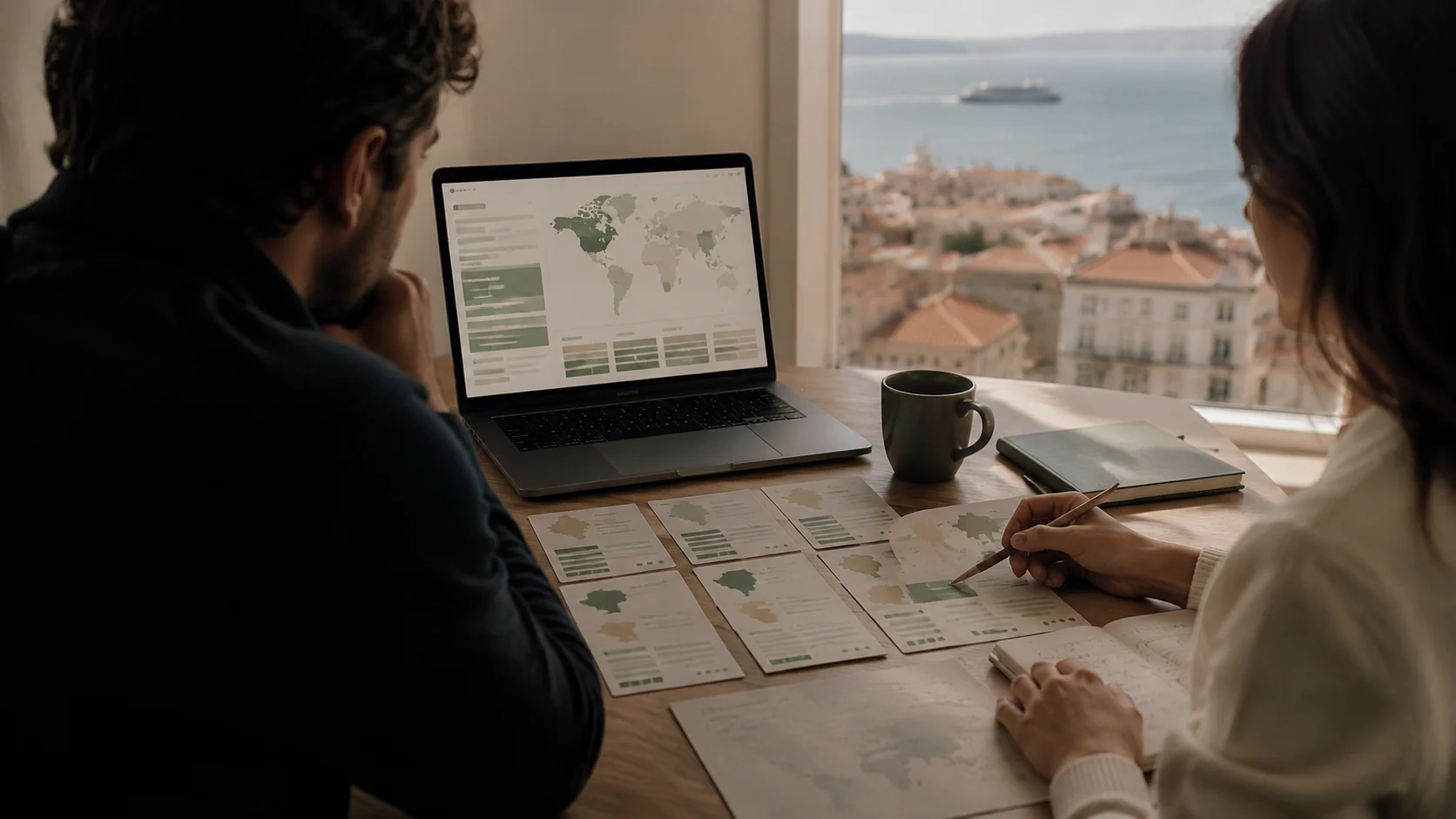
Anonymous research file

An AI engineer compares O-1 and EB-2 NIW research questions.

A structured, anonymized research walkthrough showing how a high-skill technical profile can organize questions before speaking with counsel. It does not prove any outcome for another person.

Official-source trail visibleNo route scoringCounsel-ready questions
Research preparation boundary

Use this page to organize public criteria, evidence categories, timing questions, and official sources before a professional consultation.

Route dossier

Keep profile, evidence, sources, and questions in view.

Each page keeps context, evidence categories, source status, and professional questions as separate working surfaces before the detailed notes take over.

01

Profile context

Use the reader's facts as the first lens before comparing route mechanics.

02

Document questions

Keep evidence questions separate from timing, source checks, and any professional interpretation.

03

Source trail

Use official-source status and update timing as part of the page, not as a hidden footnote.

04

Counsel brief

Move the page into prepared questions, packet structure, and next-source checks.

Editorial case file

Turn an anonymous scenario into organized research notes.

The file format keeps profile context, evidence buckets, route questions, and source reminders separate so readers do not treat one scenario as proof.

Anonymous scenarioNot a result proofResearch walkthrough

Preparation loop

Move from research notes to a cleaner first conversation.

PathwayMatch keeps the public flow practical: organize evidence, prepare professional questions, and only share details when the user explicitly chooses a handoff.

01

Inventory evidence

Group broad evidence categories before interpreting strength or route implications.

Open inventory
02

Prepare questions

Turn route names, timing pressure, and source gaps into a short consultation agenda.

Open checklist
03

Consent-based handoff

Keep private details and legal advice inside the professional relationship the user chooses.

Review boundary

Scenario snapshot

The confusion starts with overlapping evidence themes.

The profile has several technical-impact signals but does not know how they relate to different routes.

  • Works on production machine learning infrastructure used by multiple teams.
  • Maintains an open-source library with visible adoption signals.
  • Has conference talks, technical writing, and internal leadership evidence.
  • Faces timing pressure because current work authorization may not be stable enough.

Research split

The first task is to separate O-1 mechanics from NIW framing.

The same profile facts may produce different questions depending on route mechanics.

  • O-1 questions focus on petitioner structure, role, extraordinary-ability evidence, and timing.
  • EB-2 NIW questions focus on EB-2 threshold, proposed endeavor, national importance, and positioning.
  • Open-source adoption needs context before it is interpreted as field impact.
  • Company-internal evidence may be useful context but needs careful handling.

Prepared output

The useful result is a short research packet and counsel question list.

This format helps users prepare without pretending that an anonymous scenario proves anything about their own facts.

  • Inventory public evidence separately from internal evidence.
  • List timing and status constraints before comparing routes.
  • Bring route-specific questions to counsel instead of asking for a generic yes/no answer.
  • Recheck official sources before relying on old forum or article advice.

Deeper research notes

Turn the page into a stronger preparation packet.

These notes add context, source checks, and counsel-prep prompts without turning the page into a route decision.

Scenario discipline

Use anonymous scenarios as structure, not proof.

Case-file pages can feel forum-like while staying safer than success stories or outcome claims.

  • Explain which facts are intentionally generic or anonymized.
  • Separate scenario facts from route mechanics and source checks.
  • Treat the walkthrough as an example of organization, not as a prediction for similar readers.
  • Avoid implying that another reader with similar facts should expect the same answer.

Reader transfer

Help readers extract their own research questions.

The case file should end with reusable preparation steps rather than a conclusion about the scenario.

  • Prompt readers to identify which facts in their situation are public, private, missing, or dynamic.
  • Link back to profile, comparison, and evidence pages so the scenario does not become the only research surface.
  • Ask which facts need professional interpretation before being shared externally.
  • Keep the scenario clearly separated from legal advice or case review.

Continue researching

Use these connected pages to move from timing pressure to comparison, evidence preparation, and tool output.

Source review

Official references stay visible.

This page keeps the public-source trail near the research workflow so dynamic facts can be rechecked before a professional conversation.

CurrentChecked 2026-05-07Monthly review

Questions for counsel

Prepare the professional conversation.

These prompts are meant to organize discussion topics, not to answer them automatically.

  • Which route mechanics should this profile understand before deeper review?
  • Which technical-impact signals are public enough to organize first?
  • Which internal-company facts should be discussed carefully with counsel?
  • What timing constraints should be addressed before evidence interpretation?

Important boundary: This research file is an anonymous educational scenario, not legal advice, case review, strategy selection, or result prediction.