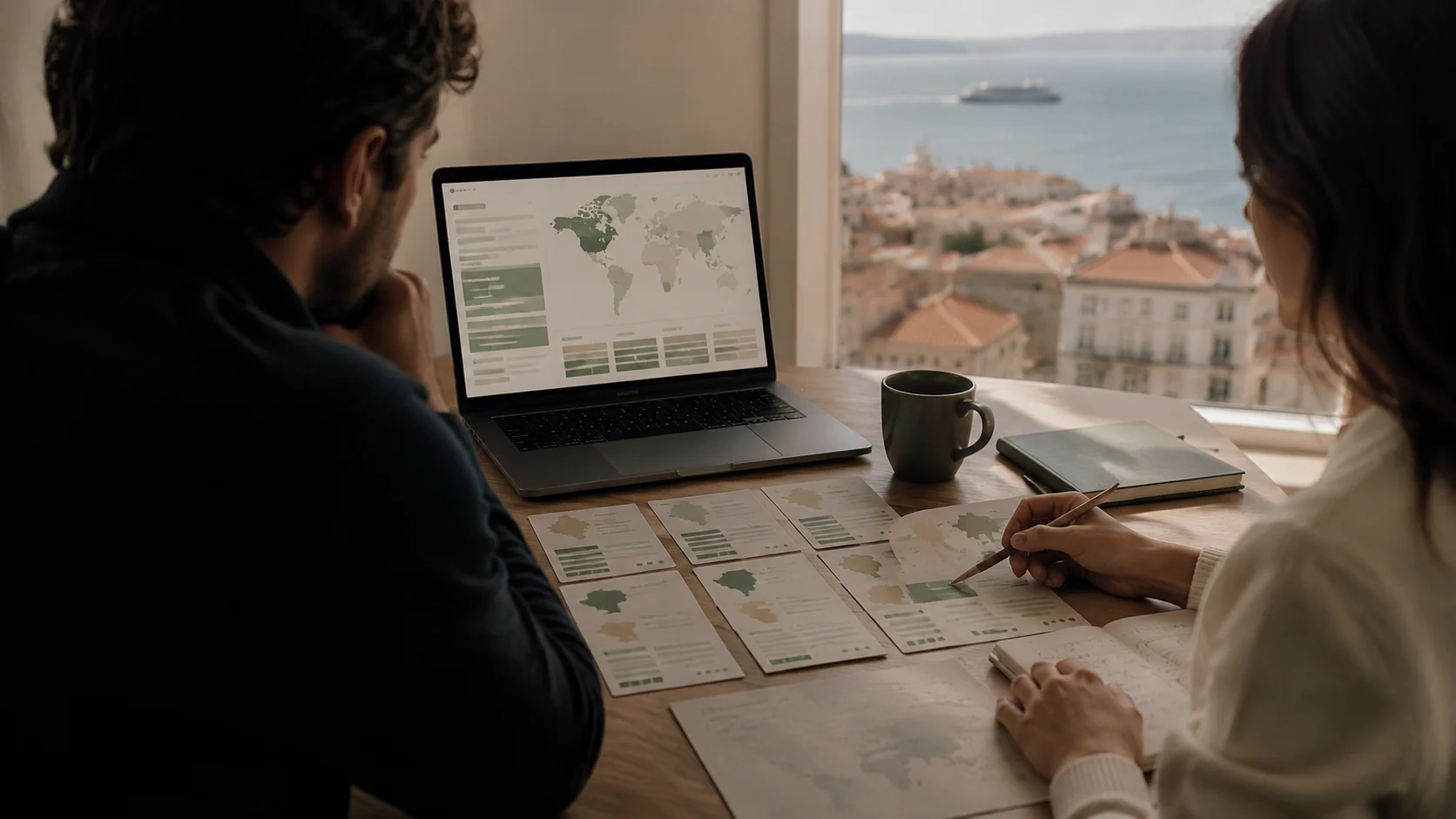
O-1 evidence preparation

Map O-1 evidence themes before a professional interprets them.

This evidence page helps users organize common O-1 research categories without deciding whether any item is enough for a petition.

Official-source trail visibleNo route scoringCounsel-ready questions
Research preparation boundary

Use this page to organize public criteria, evidence categories, timing questions, and official sources before a professional consultation.

Route dossier

Keep profile, evidence, sources, and questions in view.

Each page keeps context, evidence categories, source status, and professional questions as separate working surfaces before the detailed notes take over.

01

Profile context

Use the reader's facts as the first lens before comparing route mechanics.

02

Document questions

Keep evidence questions separate from timing, source checks, and any professional interpretation.

03

Source trail

Use official-source status and update timing as part of the page, not as a hidden footnote.

04

Counsel brief

Move the page into prepared questions, packet structure, and next-source checks.

Evidence terrain

Group recognition, role, and technical-impact signals into discussion buckets.

This visual separates evidence categories from interpretation, so users can prepare a cleaner research packet before professional review.

RecognitionField impactSensitive material

Preparation loop

Move from research notes to a cleaner first conversation.

PathwayMatch keeps the public flow practical: organize evidence, prepare professional questions, and only share details when the user explicitly chooses a handoff.

01

Inventory evidence

Group broad evidence categories before interpreting strength or route implications.

Open inventory
02

Prepare questions

Turn route names, timing pressure, and source gaps into a short consultation agenda.

Open checklist
03

Consent-based handoff

Keep private details and legal advice inside the professional relationship the user chooses.

Review boundary

Research buckets

O-1 evidence is easier to discuss when it is grouped by theme.

The goal is to prepare categories and questions, not to turn the page into an application checklist.

  • Awards, prizes, recognition, or field-specific honors.
  • Published material, press, speaking, authorship, or public expert signals.
  • Judging, review work, selection panels, or evaluation of others' work.
  • Critical role, original contribution, high compensation, membership, or comparable evidence themes.

AI / ML examples

Technical evidence often needs translation into field impact.

AI and software evidence can be valuable research material, but it often needs context before professional interpretation.

  • Open-source adoption should be documented with usage, dependency, citation, or community signals.
  • Internal platform impact may need independent context or careful confidentiality handling.
  • Technical leadership should be separated from ordinary job duties.
  • Product or research influence should be tied to audience, field, adoption, or external recognition where possible.

Gaps

A useful inventory also records weak spots and open questions.

Recording uncertainty is safer than pretending every item is evidence-ready.

  • Mark items that are private, employer-sensitive, or hard to verify.
  • Separate strong public signals from early or ambiguous signals.
  • Note which items need letters, third-party support, or additional context.
  • Ask counsel which categories are worth deeper review before collecting more material.

Deeper research notes

Turn the page into a stronger preparation packet.

These notes add context, source checks, and counsel-prep prompts without turning the page into a route decision.

Evidence map

Organize proof by category before judging relevance.

Evidence pages should reduce the messiness of user notes without implying that a category is sufficient or required for a result.

  • Group achievements by recognition, authorship, judging, original contribution, critical role, company traction, or comparable themes.
  • Separate public-source evidence from internal, confidential, client, investor, or employer-controlled material.
  • Flag where independent corroboration, source context, or field-level explanation may be needed.
  • Keep category labels stable so a professional can quickly see what has been organized.

Review gaps

Make gaps visible without filling them with assumptions.

A useful evidence page helps readers identify what they do not yet know.

  • List missing dates, source links, third-party context, role descriptions, and timing facts as open questions.
  • Note whether an example is recent, independently verifiable, or tied to a private employer record.
  • Avoid converting gaps into negative conclusions or route disqualification language.
  • Use gaps as counsel-prep prompts and source-check tasks.

Continue researching

Use these connected pages to move from timing pressure to comparison, evidence preparation, and tool output.

Source review

Official references stay visible.

This page keeps the public-source trail near the research workflow so dynamic facts can be rechecked before a professional conversation.

CurrentChecked 2026-05-07Monthly review

Questions for counsel

Prepare the professional conversation.

These prompts are meant to organize discussion topics, not to answer them automatically.

  • Which O-1 evidence themes are worth organizing first?
  • Which technical-impact signals need more independent context?
  • Which materials should not be shared in a lightweight tool?
  • Which route facts or fee details should be rechecked before relying on this research?

Important boundary: PathwayMatch provides research preparation, not legal advice. It does not make legal judgments, choose a strategy, predict results, or rank lawyers.