
01
Profile inputs
Passport, work style, budget, and family signals stay visible before the report is built.
PathwayMatch Assessment
Choose whether you are focused on the U.S., another country, or still open. The intake then asks only the details that change your cost scenario, requirement checklist, source-backed comparison, and professional questions to verify.
Research dossier
Keep the facts that matter close together: your target, work and income pattern, documents, timing pressure, family needs, and source questions.
Passport, work style, budget, and family signals stay visible before the report is built.
Documents and fragile assumptions are separated from route mechanics.
The result becomes a cleaner requirement brief for source-backed review and professional questions.
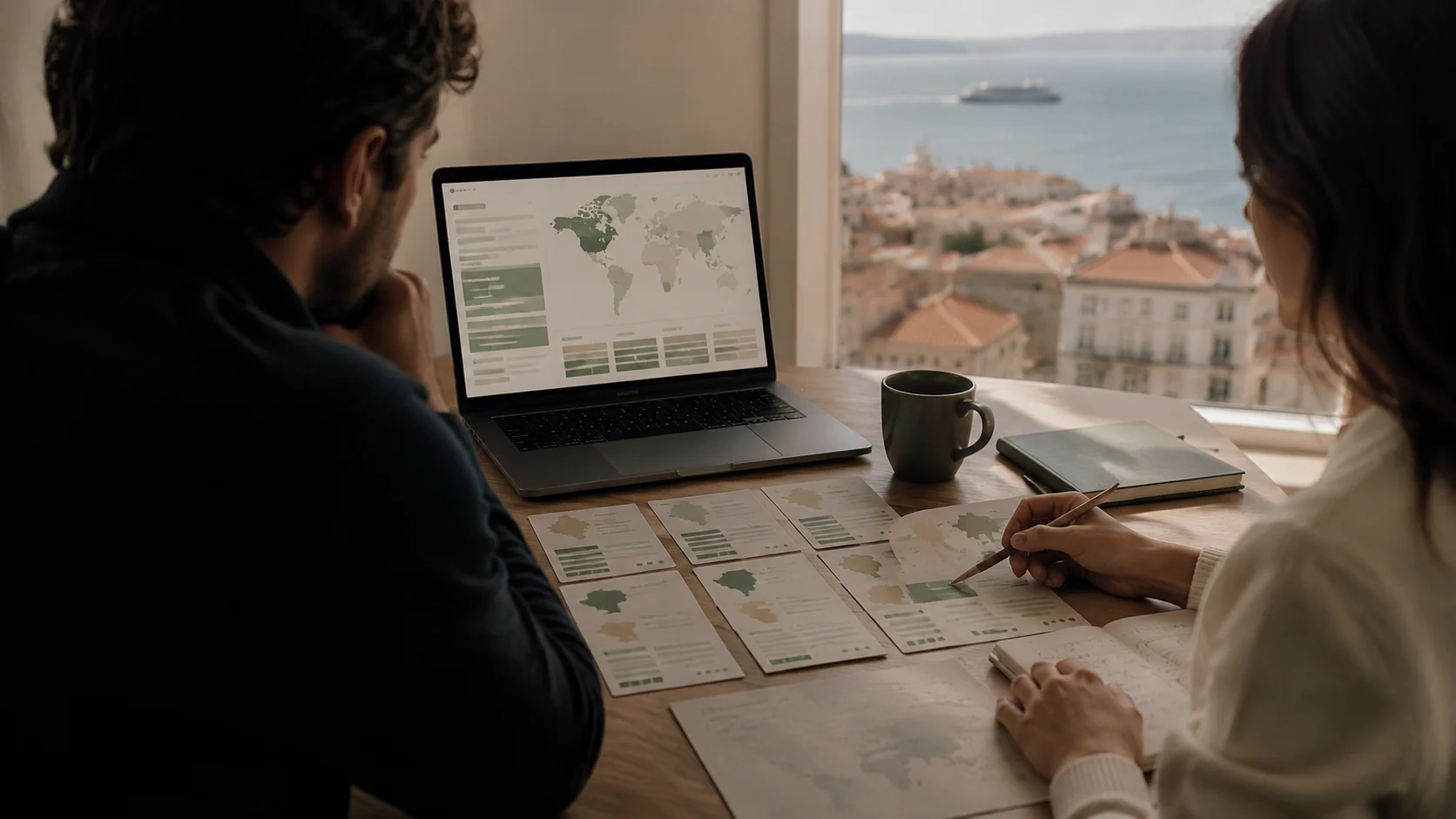
Destination imagery keeps the research set concrete while the form stays focused.
Assessment flow
Start with U.S., another country, or an open comparison before the form asks for details.
U.S. paths ask about status and proof; non-U.S. paths ask about language, offers, credentials, and funds.
Passport, residence, work style, income, savings, family, and timeline shape the report.
Risk tolerance, urgency, budget pressure, and family needs keep the result practical.
Cost scenario, requirement checklist, source-backed comparison, and professional questions.
What we organize
The first answer selects the question set. Later answers change the cost scenario, requirement checklist, evidence plan, and open questions that appear in your prep report.
Published requirements and questions to verify.
Processing window and appointment pressure.
Fees, evidence prep, and relocation budget.
How hard the route is to document.
PR, citizenship, and renewal horizon.
Dependent inclusion and practical settlement needs.
Prep report
The form first separates U.S., non-U.S., and open comparison journeys before any route page is opened.
Income proof, savings, dependent documents, and timing risks stay visible together.
The report points you toward the official criteria and professional questions to check.
Privacy and source trust
Inputs stay scoped to the assessment flow and can be edited before results.
Route notes resolve into source-backed pathway pages.
The assessment works without forcing a newsletter or sales call.
Change a profile signal and rerun the result without starting over.
Report output
The assessment ends with a report that organizes routes to research, names fragile assumptions, and gives you a bridge into source-backed pages.
Worth researching for remote-income applicants who want EU optionality and a clear renewal path.
Ready to organize your route questions?